Table of Contents
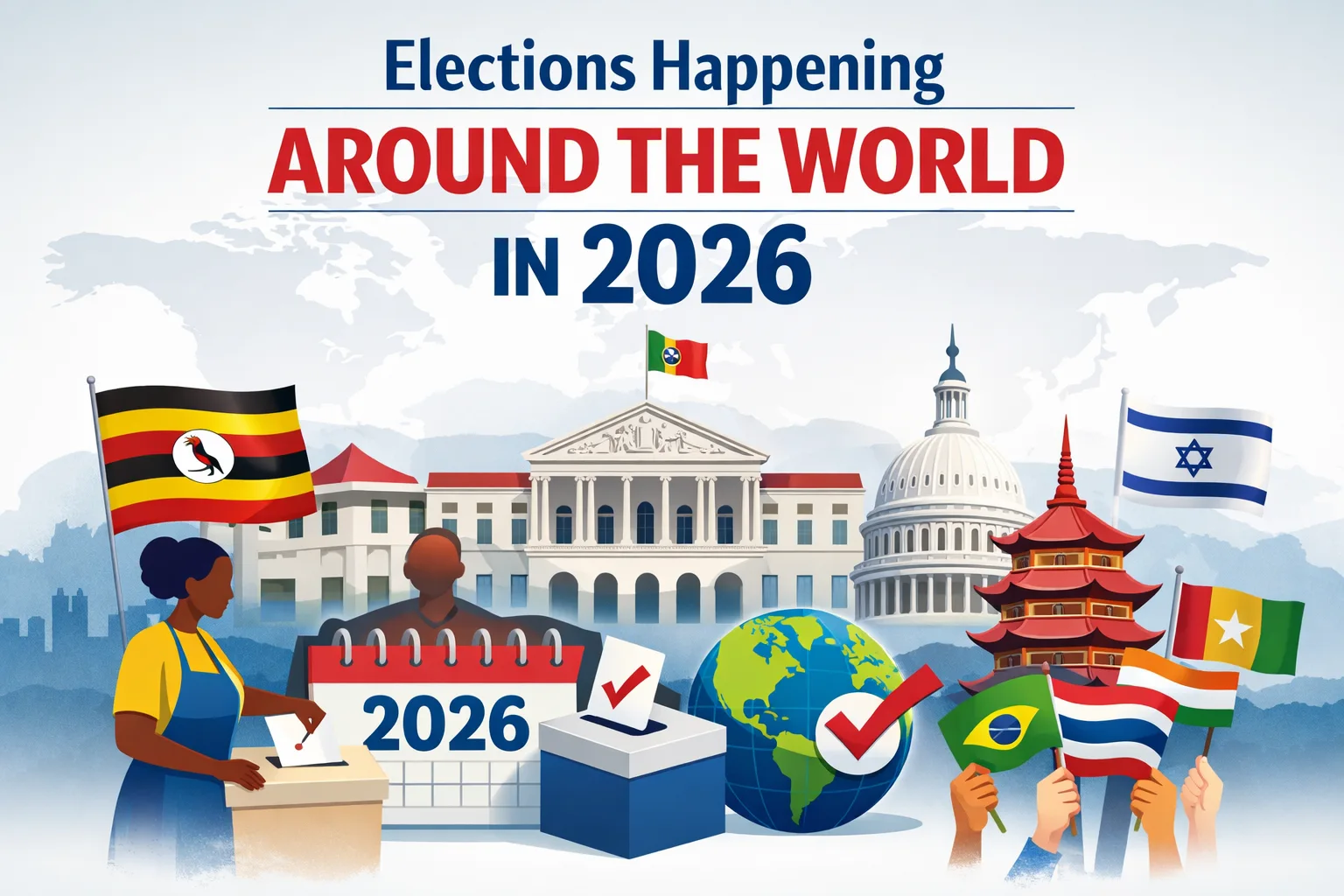
Starting January 2026, elections have already become headline news in multiple regions.
In Uganda, the presidential and parliamentary vote on January 15 was overshadowed by an internet blackout and heavy militarization in the capital Kampala and beyond, a move widely seen as an attempt to control election‑related information ahead of polling. Incumbent President Yoweri Museveni, in power since 1986 and seeking a seventh term, cast the election as a choice between continuity and stability, but the mood on the ground appears tense, with opposition calls for peaceful turnout amid reports of security force crackdowns.
Meanwhile, in Portugal’s presidential race, set for January 18, fragmentation is defining the contest. Polls show far‑right leader André Ventura narrowly ahead of more centrist candidates, a dynamic likely to push the election into a runoff — scheduled for February 8 if no candidate secures over 50% of votes — marking the first presidential runoff in four decades. Though largely ceremonial, the Portuguese presidency wields meaningful influence in crises, including powers to dissolve parliament or dismiss governments.
In Bulgaria, persistent political instability is pushing the country toward another snap election after rival coalitions failed to form a government. Analysts warn this could be the eighth ballot in just four years, a pattern of revolving governance that risks undermining investor confidence and complicating Bulgaria’s strategic priorities following its recent entry into the eurozone.
These early January contests set the tone for a year in which governance fatigue, party fragmentation, and authoritarian pressure will recur in the upcoming elections 2026 narrative.
Asia’s Early Shakeups and Parliamentary Struggles
As winter yields to spring, several Asian democracies are preparing for pivotal ballots.
In Bangladesh, a general election is scheduled for February 12, 2026, to elect members of the Jatiya Sangsad under an interim government installed in 2024, marking a critical step in transitioning away from the political turbulence that followed mass uprisings and the ouster of former prime minister Sheikh Hasina.
In Nepal, early general elections are slated for March 5, 2026, where all 275 seats in the House of Representatives will be contested. The poll follows the dissolution of the previous parliament amid mass protests and highlights the ongoing struggle for political stability in a country still defining its post‑monarchy democratic identity.
Across Southeast Asia, several national and sub‑national contests are shaping up as barometers of political change in early 2026.
Thailand’s general election on February 8 will see voters choose 500 lawmakers amid deepening debates over constitutional reform and the role of nationalist narratives in public life, while a constitutional referendum on the same day asks citizens whether to start drafting a new charter that could reshape governance structures.
Central Europe’s Balancing Act
Slovenia’s parliamentary election on March 22, 2026, offers a vivid tableau of a small EU member wrestling with broader continental trends, from migration policy to economic performance and political polarization between governing liberals and a resurgent right. President Nataša Pirc Musar has warned against disinformation and undue foreign influence, underscoring how even smaller democracies must increasingly fortify electoral integrity.
Not far away, Hungary is set for a parliamentary vote on April 12, 2026, in what many observers describe as one of Europe’s most consequential elections of the year. Prime Minister Viktor Orbán’s Fidesz party, dominant for over a decade, is trailing the opposition Tisza party in most independent polls. A Tisza victory could significantly shift Hungary’s trajectory on issues from EU relations and judicial independence to social policy and media freedom.
These Central European contests highlight a broader pattern in 2026 elections worldwide: democratic resilience under stress, where economic challenges and political fatigue amplify both populist insurgencies and establishment pushback.
Africa’s Continental Crossroads
Across Africa, 2026 is unusually busy, with elections scheduled throughout the year: from Benin’s parliamentary election on January 11 and presidential vote on April 12, to Ethiopia’s general election on June 1, and Zambia’s general election on August 13.
In Ethiopia, the general election on June 1, 2026, could reshape the Horn of Africa’s political landscape. Prime Minister Abiy Ahmed’s Prosperity Party faces mounting criticism over governance and ethnic tensions that threaten both stability and electoral credibility.
The Republic of the Congo’s presidential election on March 22, 2026, is another critical contest. Longtime ruler Denis Sassou Nguesso, in power for decades, is contesting again after constitutional amendments lifted age and term limits.
By contrast, Cape Verde’s electoral cycle in 2026 spans multiple phases, with a parliamentary election expected in the spring (around April) and a presidential election set for October 2026, offering a steadier democratic script with competitive dynamics between governing coalitions and opposition forces.
The African electoral calendar in 2026 also includes several other significant national contests beyond the headline races.
Djibouti is scheduled to hold a presidential election by April 2026, where long‑time leader Ismaïl Omar Guelleh is expected to run again after constitutional changes allowed him to extend his tenure.
São Tomé and Príncipe will hold its presidential election by July 2026, followed by parliamentary elections in September 2026, presenting a rare full cycle of leadership and legislative ballots in the small island state.
Morocco’s general election is scheduled for September 2026 to elect all 395 members of its House of Representatives in a vote likely to determine the next governing coalition.
The Gambia plans its presidential election for December 5, 2026, with voter registration and campaign activities slated in the preceding months.
And in South Sudan, general elections are set for December 22, 2026, marking the first national polls since independence after years of delays tied to internal conflict, incomplete institutional frameworks, and transitional arrangements.
The Americas’ Divergent Paths
Across the Western Hemisphere, election dynamics vary sharply.
In Colombia, legislative elections on March 8, 2026, will test President Gustavo Petro’s coalition’s strength and its ability to advance economic and social reforms amid a fragmented political environment.
Costa Rica’s general election on February 1, 2026, is set to determine both the presidency and legislative control. Key presidential contenders, including Laura Fernández of the National Liberation Party and other leaders from established and emerging parties, are campaigning on platforms addressing fiscal policy, healthcare, and environmental priorities.
In Brazil, the general election scheduled for October 4, 2026, will be one of Latin America’s most closely watched contests, with debates over economic inequality, democratic norms, and climate policy driving voter attention across a diverse electorate.
In Haiti, general elections slated for August 30 (first round) and December 6, 2026, (second round) aim to restore national governance after years of crisis and delayed ballots, although security challenges continue to loom large.
Meanwhile, the U.S. midterm elections on November 3, 2026, will determine control of Congress and could profoundly affect Washington’s domestic and foreign policy priorities.
Middle East at the Polls
In the Middle East, several major electoral contests and politically significant ballots are shaping up in 2026, each with its own set of stakes and uncertainties.
Lebanon’s parliamentary elections are currently scheduled for May 2026, with all 128 seats in the National Assembly expected to be contested. These elections come amid intense debates over decentralization, sectarian power‑sharing, and economic reform, with higher registration fees and diaspora engagement emerging as additional flashpoints.
Israel’s next parliamentary election is due by October 2026 under the current legal timetable, though internal coalition fragility and debates over judicial reform and economic policy are shaping pre‑election dynamics. The vote unfolds against the backdrop of Israel committing genocide in Gaza, an issue dominating public discourse and international scrutiny.
Libya’s presidential and parliamentary elections remain a focal point for regional diplomacy and internal stabilization efforts. The country’s High National Elections Commission has signaled its readiness to implement national elections as early as mid‑April 2026, contingent on finalizing electoral laws and institutional frameworks.
Bahrain’s general elections are scheduled to be held by November 2026 for the 40‑member Council of Representatives, the elected lower chamber in the bicameral National Assembly. These elections will gauge public sentiment on domestic economic priorities and reforms against the backdrop of a political system where the upper consultative chamber remains appointed by the king.
Youth, Technology, and the Changing Voter Landscape
Youth participation and technology are recurring subplots in upcoming elections 2026. In many emerging democracies, younger generations are pushing for accountability, transparency, and systemic reform, reshaping political messaging and turnout models.
At the same time, concerns about internet shutdowns, disinformation campaigns, and election security are not unique to any one region; from Uganda’s blackout to European warnings about foreign interference in digital spaces, these digital battlegrounds may matter as much as ballot boxes in shaping perceptions of legitimacy and trust.
Looking Ahead
By year‑end, the global electoral mosaic will have offered both cautionary tales and hopeful turns. Patterns of executive entrenchment, youthful impatience for change, and digital challenges to electoral integrity converge to make 2026 one of the most geopolitically consequential election years in recent memory.
For policymakers, analysts, and everyday citizens lining up to vote, these ballots are both a reckoning and an opportunity: a reminder that while democracy remains imperfect, it continues as the foremost mechanism for expressing collective will.