Table of Contents
If global trade were a bloodstream, the Panama and Suez Canals would be its aorta and carotid arteries. They are tiny in size compared to the oceans they connect, yet absolutely vital for keeping the world economy alive. Miss a beat in either, and suddenly supply chains seize up, prices spike, and politicians start sweating in conference rooms.
But just how much trade actually passes through these critical chokepoints?
The Panama Canal: America’s Strategic Shortcut
The Panama Canal, slicing across Central America, is arguably the world’s most ingenious shortcut. Opened in 1914, it cut weeks off the shipping journey between the Atlantic and Pacific oceans. For context: a vessel traveling from New York to San Francisco via Cape Horn would take roughly 13,000 miles. Through the Panama Canal? A mere 5,200 miles. That’s convenience and billions of dollars in fuel and time saved.
Trade Volume and Key Cargoes
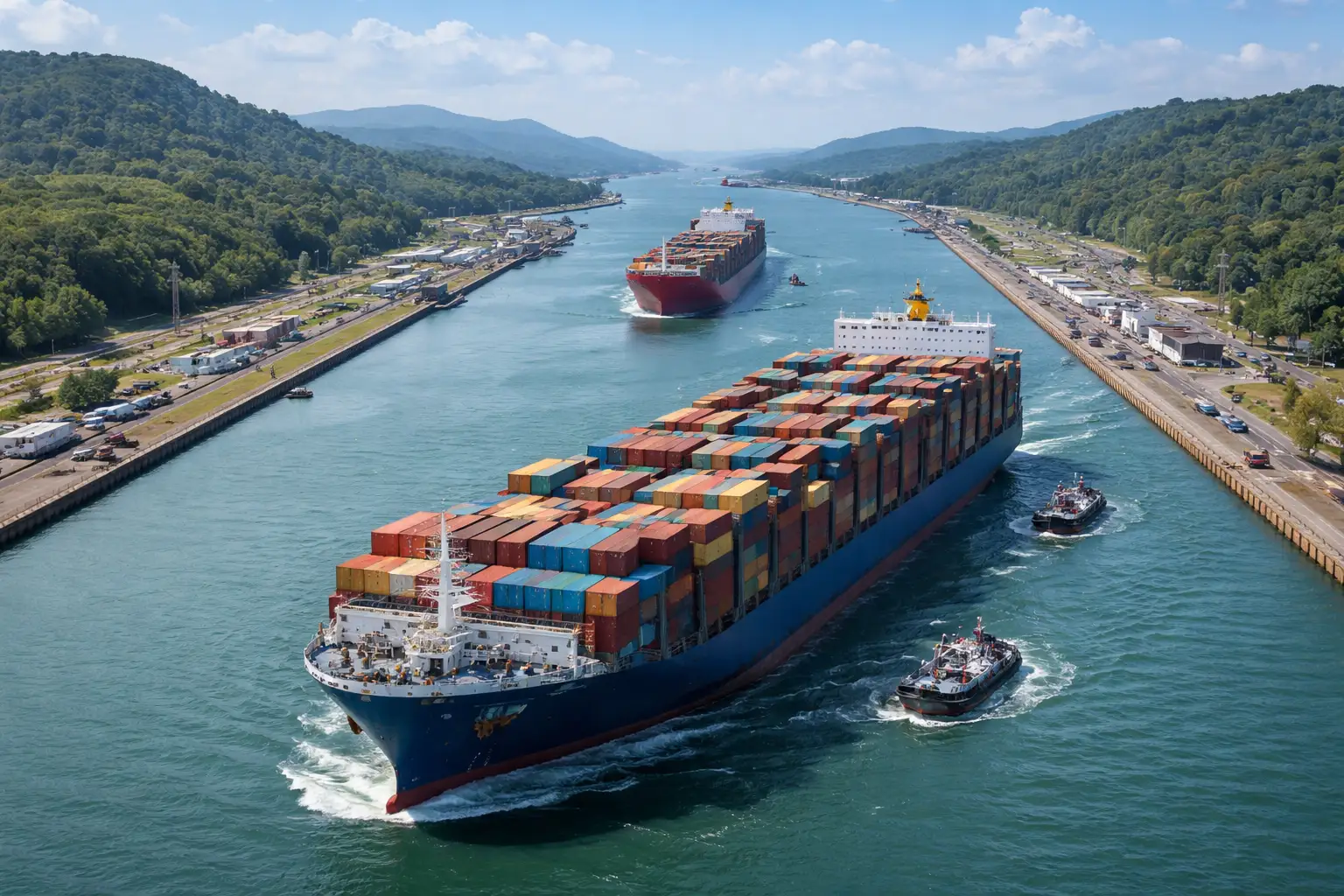
In 2025, roughly 14,000 ships transited the Panama Canal, moving over 400 million tons of cargo. That includes everything from containerized consumer goods and grain to oil, liquefied natural gas, and vehicles. The canal is a lifeline for trade between Asia and the Americas. China, for instance, is the largest Asian user of the canal, shipping everything from electronics to machinery to U.S. and Latin American markets.
The Panama Canal Expansion, completed in 2016, doubled the size of ships that could pass through, ushering in the era of “New Panamax” vessels. Suddenly, mega-ships carrying 14,000+ containers could transit the canal, increasing its strategic value exponentially.
Geopolitical Implications
The canal isn’t just a traffic artery; it’s a geopolitical lever. Control, or even influence, over the canal gives significant sway over U.S., Chinese, and regional trade routes. The U.S., historically protective of the canal’s operation, keeps a careful eye on Panama’s politics.
Meanwhile, China’s investments in port infrastructure across the Americas hint at ambitions to ensure its commercial ships never get stuck waiting.
And let’s not forget: major incidents can cause global ripples. In 2019, a vessel jammed the canal temporarily, sending freight costs skyrocketing and supply chains into minor chaos. Imagine that on a larger scale: one mismanaged storm or political upheaval could disrupt hundreds of billions in trade.
The Suez Canal: Egypt’s Golden Passage
Now, shift your gaze to the Suez Canal, the Egyptian marvel connecting the Mediterranean to the Red Sea. Opened in 1869, it’s even narrower than Panama, yet handles a staggering portion of global trade. About 12% of all global trade, or roughly 50 ships per day, pass through it. That translates to over 1 billion tons of cargo annually. Oil, LNG, containers, bulk commodities… it’s all moving through Suez, keeping Europe supplied and Asian exports flowing.
Strategic and Economic Importance
The Suez Canal is Egypt’s economic heartbeat. Canal revenues account for nearly 10% of Egypt’s GDP, providing the government with critical hard currency.
But it’s also a potential nightmare: its narrow corridor makes it highly vulnerable to accidents, blockages, or geopolitical friction.
Anyone who remembers the Ever Given debacle of 2021 knows the stakes. A single 400-meter container ship stuck sideways for six days cost global trade an estimated $9–10 billion. That’s not a typo: it’s billions lost in under a week because one narrow waterway is the only practical shortcut between Europe and Asia.
Geopolitics and Vulnerabilities
The Suez Canal is also a geopolitical tinderbox. Conflicts in the Middle East can threaten shipping lanes, while piracy, terrorism, or regional tensions could disrupt traffic. Control of the canal has always been politically charged: Egypt nationalized it in 1956, triggering a regional war. Today, the canal is a strategic chokepoint in global energy and commerce, watched closely by superpowers.
Panama vs Suez
When comparing Panama and Suez, the differences are striking:
- Volume: Suez handles a slightly higher tonnage due to its heavy energy shipments, while Panama excels in container traffic between Asia and the Americas.
- Vessel Size: Panama’s expansion allows for New Panamax mega-ships, whereas Suez is limited to a slightly smaller class of vessels.
- Geopolitical Stakes: Panama is largely under U.S. influence and regional stability, while Suez sits at the crossroads of Middle East tensions, making it more geopolitically volatile.
- Alternative Routes: Disruption at Suez is more painful. Ships rerouted around the Cape of Good Hope face thousands of additional miles, adding weeks to transit time. Panama has fewer alternatives, but the impact is slightly less global.
It’s also worth noting the Arctic is slowly emerging as an alternative trade route due to melting ice, but seasonal limitations, extreme weather, and geopolitical uncertainties mean Panama and Suez aren’t going anywhere anytime soon.
Why These Canals Matter Beyond Shipping
It’s tempting to dismiss canals as just “big watery shortcuts,” but they are global economic shock absorbers. Any disruption, even temporary, affects:
- Fuel prices: Oil shipments are heavily dependent on Suez. A blockage inflates crude costs worldwide.
- Consumer goods: Electronics, furniture, and even food can get delayed, causing shortages and price surges.
- Geopolitical leverage: Nations controlling or influencing canal operations can wield power far beyond their borders.
The Road Ahead: Risks and Opportunities
Looking forward, several trends could reshape these waterways’ roles:
- Climate change: Rising sea levels and changing weather patterns may affect canal operations and maintenance.
- Technological advances: Automation, mega-ships, and AI-driven navigation could increase throughput but also introduce new vulnerabilities.
- Geopolitical shifts: U.S.-China tensions, regional conflicts, or Egypt’s internal politics could influence canal control and accessibility.
- New trade routes: Arctic sea lanes and advanced overland corridors (like rail through Eurasia) could reduce dependence, but only marginally in the near term.
The Panama and Suez Canals are more than engineering marvels; they are global chokepoints, strategic assets, and economic bellwethers. Panama handles immense container traffic linking Asia and the Americas, while Suez dominates oil and energy flows between Asia and Europe. Both are vulnerable, politically sensitive, and financially critical.
Next time your Amazon package arrives late, or fuel prices spike, remember: it might not be your local logistics company at fault, it could be one ship, in one canal, thousands of miles away, holding the global economy in a watery chokehold.