Table of Contents
Body Mass Index, commonly known as BMI, is a widely used tool that helps individuals assess whether they have a healthy body weight relative to their height. Although it does not provide a complete picture of overall health, BMI is a simple and practical starting point for understanding weight-related health risks.
Calculating your BMI is important for several reasons. Healthcare professionals often use it as a screening tool to identify potential risks for conditions such as heart disease, diabetes, and high blood pressure. Fitness enthusiasts and individuals managing their lifestyle can use BMI to set realistic goals and monitor progress.
What is BMI?
Body Mass Index (BMI) is a numerical value derived from a person’s weight and height. It provides a standardized method to categorize individuals into weight ranges that may indicate potential health risks.
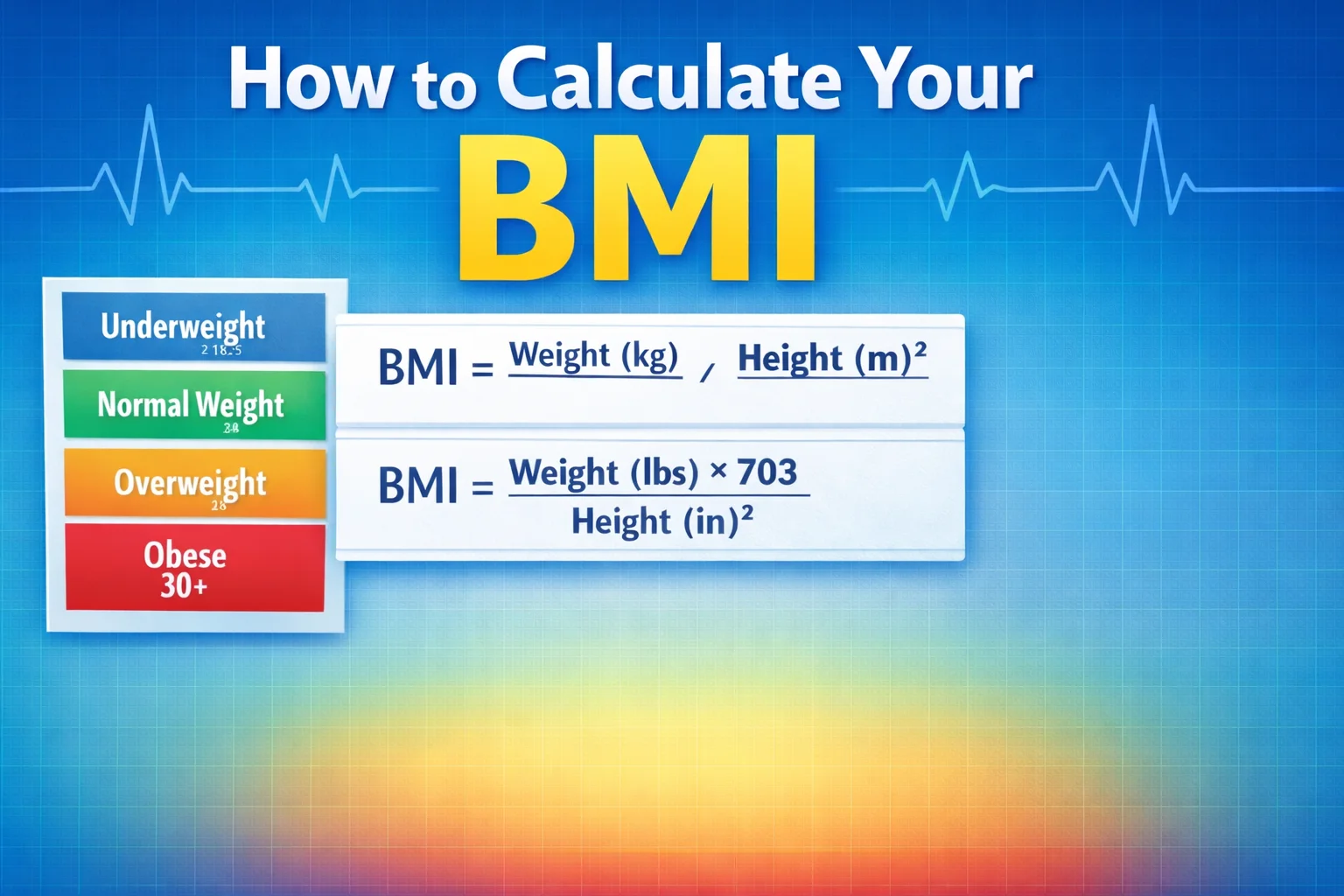
Scientifically, BMI is expressed as:
BMI = Weight (kg) / (Height m)²
Or, for imperial units:
BMI = {Weight (lbs) x 703} / (Height in)²
While BMI is a useful screening tool, it does not account for:
- Muscle mass vs. fat mass
- Bone density
- Fat distribution
- Age or sex variations
For example, athletes with high muscle mass may have a BMI that categorizes them as overweight, even though their body fat percentage is low. Similarly, older adults may have normal BMI but reduced muscle mass, increasing their health risks.
Why Calculate Your BMI?
Understanding your BMI provides several health benefits:
- Monitor weight trends: Track changes over time to maintain a healthy weight.
- Identify potential risks: High or low BMI may indicate risks for chronic diseases like diabetes, cardiovascular issues, or malnutrition.
- Set realistic fitness goals: Helps tailor diet and exercise programs based on body composition.
- Medical screening: Doctors often use BMI as an initial check before recommending further tests.
BMI should be used as a guideline, not a verdict, and it works best when combined with other health metrics.
How to Calculate Your BMI
Standard BMI Formula
- Metric system:
BMI = Weight (kg) / (Height m)²
- Imperial system:
BMI = {Weight (lbs) x 703} / (Height in)²
Example Calculations
Example 1: Metric system
- Weight: 70 kg
- Height: 1.75 m
BMI = 70 kg / (1.75 m)² = 22.86
Example 2: Imperial system
- Weight: 154 lbs
- Height: 69 in
BMI = (154 lbs x 703) / (69 in)² = 22.74
These results fall within the normal weight range (18.5–24.9), as explained in the next section.
BMI Categories
BMI is divided into standard categories that indicate potential health risks:
| BMI Value (kg/m²) | Category | Interpretation |
| Below 18.5 | Underweight | Risk of nutritional deficiency and osteoporosis |
| 18.5 – 24.9 | Normal weight | Healthy range, lowest risk for chronic diseases |
| 25.0 – 29.9 | Overweight | Increased risk of cardiovascular disease |
| 30.0 and above | Obesity | High risk for chronic conditions like diabetes, heart disease, and joint problems |
These categories are recommended by the World Health Organization (WHO) and widely used in clinical settings.
Tips for Accurate BMI Calculation
Accurate BMI assessment requires proper measurement techniques:
- Measure weight correctly: Use a calibrated scale on a flat surface, preferably in the morning.
- Measure height accurately: Stand straight against a wall without shoes; use a stadiometer if possible.
- Consistency: Measure at the same time of day and under similar conditions to track trends reliably.
Special Considerations
- Children and teenagers: BMI is age- and sex-specific, expressed as percentiles rather than absolute values.
- Athletes: High muscle mass may overestimate BMI; consider body fat percentage for accurate assessment.
- Older adults: Muscle loss can underestimate risk; use waist-to-hip ratio alongside BMI.
Limitations of BMI
While BMI is a useful guideline, it is not a comprehensive measure of health. It does not distinguish between fat and lean mass, nor does it consider fat distribution or other metabolic factors. Alternative or complementary metrics include:
- Waist-to-hip ratio: Evaluates abdominal fat distribution.
- Body fat percentage: Offers a direct measure of fat content.
- Visceral fat measurement: Important for cardiovascular risk assessment.
Using these alongside BMI provides a more complete picture of health.
Interpreting Your BMI
After calculating your BMI, consider the following steps:
- Assess your category: Identify whether your BMI falls within underweight, normal, overweight, or obese ranges.
- Evaluate lifestyle factors: Diet, exercise, stress, and sleep influence weight and overall health.
- Set realistic goals: Adjust nutrition and physical activity based on your BMI and health objectives.
- Consult healthcare professionals: If BMI indicates potential health risks or if you have other health concerns, speak with a doctor, nutritionist, or fitness specialist.
Remember, BMI is a starting point, not a definitive measure of health. Use it as a tool to guide lifestyle decisions, not as the sole judgment of your well-being.