Table of Contents
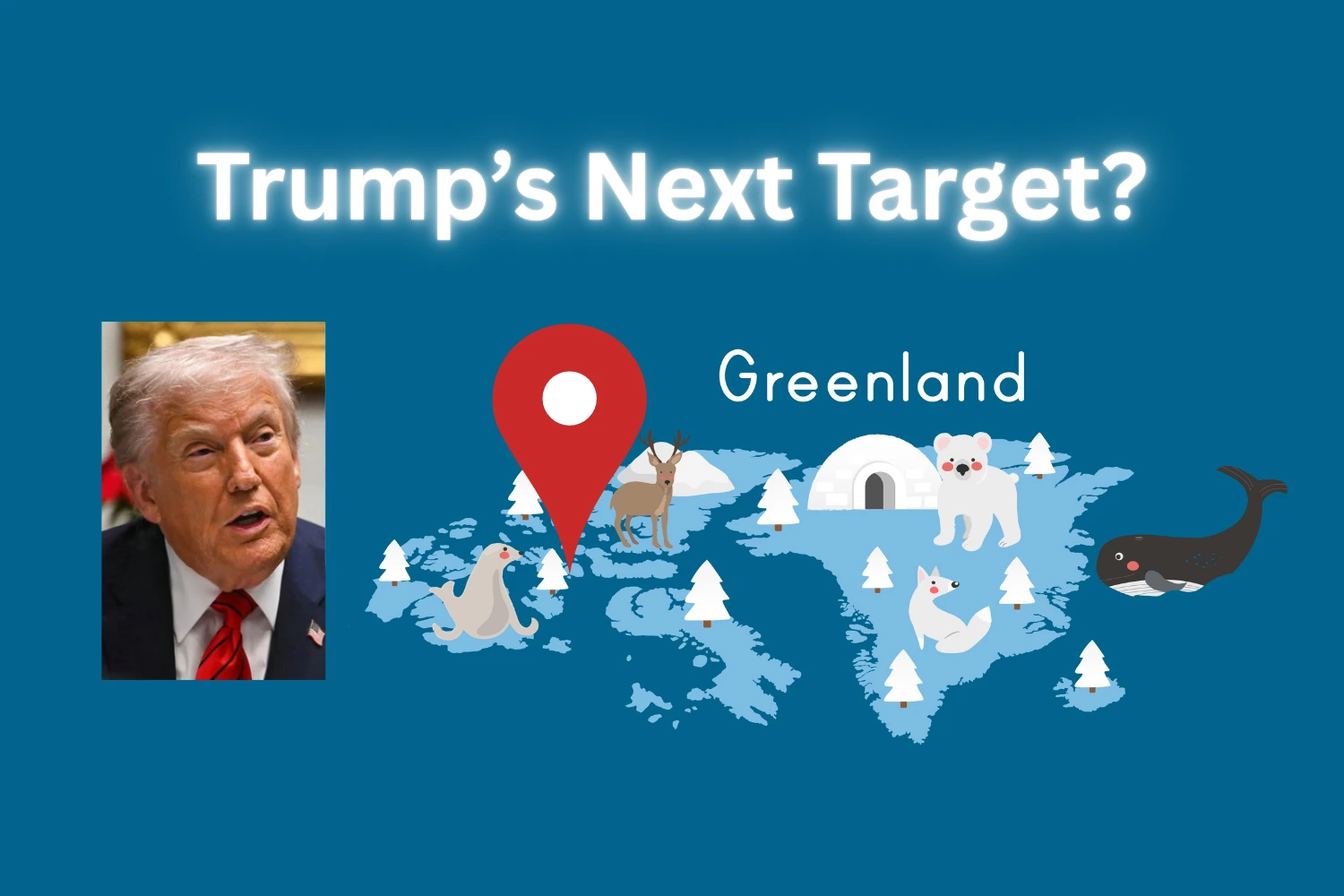
Let’s dispense with polite framing: Americans woke up this week to a foreign policy no serious strategist would publish even in satire. After a dramatic U.S. military operation in Venezuela that resulted in the capture of President Nicolás Maduro, President Donald Trump has redirected his gaze northward to Greenland, an autonomous NATO territory of Denmark.
Reports confirm that Trump didn’t whisper it; he threatened and openly entertained military options to “acquire” Greenland in the name of national security. This is the sitting U.S. president tying a controversial regime‑change operation in Venezuela and unilateral territorial ambition against a NATO ally into a single, incoherent foreign policy narrative.
The connective tissue of Trump’s worldview is a reckless pivot from diplomacy to neo‑imperial adventurism, a pattern that imperils alliances, undermines international law, and threatens global stability.
What Actually Happened in Venezuela
Let’s start with facts: U.S. forces stormed Venezuela in a high‑risk operation that captured Nicolás Maduro and transported him to the United States.
The justification? Trump claimed this intervention was part of countering narco‑terrorism, aligning Venezuela with U.S. hemispheric interests, and cracking down on authoritarianism. But that’s a velvet curtain over a simple reality: a unilateral regime change executed by force.
Such operations inevitably signal to the world that U.S. policy now privileges executive whim over collective security, coalition building, or any sense of strategic restraint.
Greenland Has Been on Trump’s Radar Before
Greenland isn’t new in this discourse. Trump first floated buying Greenland a few years ago, and the idea was rejected by Copenhagen and Nuuk alike as absurd and offensive. But this time, Trump’s rhetoric has been renewed with far more urgency.
In multiple interviews and press interactions, the president explicitly stated the United States “needs Greenland from the standpoint of national security,” and hinted that military options should remain on the table to make it happen.
Greenland is not an independent nation. It is a semi‑autonomous territory within the Kingdom of Denmark, a NATO member. Every serious foreign policy voice outside Trump’s inner circle has stressed that the idea of buying or forcibly taking Greenland is not just diplomatically inappropriate; it’s existentially poisonous to the alliance that binds transatlantic security.
The Strategic Claims: National Security or Nonsensical Fear Mongering?
Why Greenland? Trump’s stated rationale leans heavily on fear: he asserts that Russia and China have contorted the Arctic into a geopolitical playground, thereby justifying American territorial control. It’s the old playbook: inflate external threats to justify domestic distractors and expansionist impulses.
Reality check: Russia and China are indeed active in the Arctic, but no credible analyst believes they control Greenland’s strategic disposition or portend an imminent security collapse requiring U.S. sovereignty. This rhetoric mirrors Cold War paranoia rather than measured strategic assessment. The “national security” lens quickly collapses under scrutiny: the United States already enjoys extensive defense cooperation with Denmark and has long operated military facilities in Greenland under agreement.
So the justification is either a gross simplification of Arctic geopolitics or a deliberate pretext for territorial designs that have no legal or moral foundation.
Pushback From Denmark, NATO, and Europe
Even some Republicans have publicly broken ranks to call Trump’s Greenland moves “appalling”. That’s the polite version.
Denmark’s prime minister has been blunt: if the United States chooses to militarily attack or seize Greenland, that would mean the end of NATO. Greenland’s own prime minister has called the rhetoric “disrespectful” and demanded it stop, while European allies, from France to Germany to the United Kingdom, have reiterated that Greenland’s future belongs to its people and Denmark.
Think about that: a NATO ally has publicly warned that the alliance’s foundational treaty would be nullified by the United States invading another NATO member. That is the magnitude of diplomatic rupture Trump’s rhetoric has created. An operation in Venezuela has now segued into threats of aggression against a Western European ally.
International Law, Sovereignty, and the Rule of Law
Here’s where the cynicism turns sharp: international law isn’t a buffet from which global powers pick convenient provisions. The UN Charter equally prohibits unilateral aggression and the violation of territorial integrity. Invading another sovereign’s territory, even under the banner of defense, requires either clear self‑defense justification or Security Council authorization, neither of which exists here.
Yet Trump’s rhetoric implicitly dismisses these principles. He treats national sovereignty as a bargaining chip, valid only when convenient. This is the same administration that just defended regime change in Venezuela on nebulous grounds. Now the logic is being recycled to justify territorial ambition.
There is no credible legal basis for annexing Greenland. None. The only thing that makes this conversation real is the presence of raw political power and domestic distraction needs.
What Is Trump Really After?
Strip away the official narrative of national security, strategic imperatives, Arctic competition, etc., and what remains is base political calculus.
Resources: Greenland is rich in minerals, rare earths, and energy potential. These are the assets any extracting economy would salivate over. Reports have repeatedly cited Greenland’s resource wealth as a motive for Washington’s interest.
Diversion: With domestic pressures mounting, nothing unifies or distracts like an external “threat.” Sound familiar? A dramatic foreign policy shift can temporarily bury headlines about economic stagnation, electoral vulnerabilities, or governance turmoil.
Brand Building: Trump’s base thrives on bold claims. Annexing land, like 19th-century imperial powers, fuels a narrative of strength, unilateralism, and historic legacy. This is less about operational plausibility and more about the perception of power.
Bluff, Escalation, or Full‑Blown Crisis?
Given the international backlash, real invasion is unlikely. A NATO breach would unravel decades of collective defense agreements that underpin Western security architecture. Yet the threat itself, amplified by inconsistent official clarifications about whether Trump “really” means it, increases risk.
The most plausible real‑world scenario: a sustained diplomatic crisis that drags U.S. allies into defensive posture while Washington alternates between belligerence and appeasement.
Worst‑case flashpoint remains a rhetorical misstep becoming a policy directive without checks, a scenario that could trigger broader NATO responses or force European powers to rethink alliance dynamics.
Broader Implications for U.S. Foreign Policy
Let’s be honest about what we’re witnessing: this is not strategic coherence. It is not careful recalibration. It is a foreign policy guided by messianic nationalism, distraction strategy, and unchecked geopolitical hubris.
The United States once defined itself as a defender of order, not an opportunistic collector of territory. When attacks on foreign leaders and threats against allies become tools of statecraft, you don’t strengthen global order, you erode it.
Alliances fray. Norms crumble. The post‑World War II security architecture teeters on unravelling because one leader treats territorial sovereignty as negotiable.
The Danger Isn’t Imminent Invasion Alone
The real danger of Trump going for Greenland is not that Greenland will be “taken” next. The danger is that a major power leader feels empowered to publicly discuss invading a NATO ally after unilaterally toppling another country’s government.
It is reckless brinkmanship. It is the repackaging of 19th‑century imperial impulse in a 21st‑century world where laws, alliances, and mutual respect should matter.
The Greenland gambit is neither grounded in legitimate security concerns nor responsible governance. It is a symptom of unchecked geopolitical hubris, one of the most dangerous foreign policy shifts in decades.