Table of Contents
The US attacked Venezuela in January 2026 in a dramatic escalation that saw Caracas bombed, President Nicolás Maduro captured and flown out, and a provocative vow from Washington to “run the country.” Beneath the official rhetoric of narcotics, illegitimacy, and regional security lies a far more strategic calculus tied to Venezuelan oil reserves, geopolitical posturing, and a blunt projection of US foreign policy muscle.
Why Does the World Suddenly Feel Like 1989 All Over Again?
Ask yourself this: what kind of global order allows one superpower to unilaterally bomb a sovereign state, abduct its head of government, and declare it will run the country, all without a UN mandate or clear self‑defense justification? That’s precisely what happened when the US attacked Venezuela today.
In the fog of these seismic events, explosions over Caracas, secret‑war style raids, and international shockwaves, official explanations are convenient: narco‑terrorism, illegitimate elections, and mass migration.
But if you scrape past the glossy surface of American media spin and political branding, you find something darker and brutal in its simplicity: power politics, oil interests, and geopolitics.
Historical Context: A Relationship Poisoned by Oil, Ideology, and Regime Change
To understand today’s catastrophe, you must go back decades.
Since Hugo Chávez rose to power in 1999, US–Venezuela relations have been characterized by ideological hostility. Chávez’s anti‑imperialist stance, nationalization of oil, and alliance with Cuba, Iran, and later Russia made Caracas an enduring thorn in Washington’s side. When Nicolás Maduro succeeded Chávez in 2013, tensions only deepened amid Venezuela’s economic collapse and accusations of authoritarianism.
Sanctions became the primary tool of US pressure, aimed at squeezing Venezuela’s lifeblood, its oil industry, and delegitimizing Maduro’s government. Successive administrations demonized Caracas, backing rival opposition figures and ratcheting up rhetoric of corruption, repression, and criminality.
Yet these narratives masked the more enduring motivation: control of Venezuela’s extraordinary natural resources, especially oil and gas.
Today’s Context: What Really Happened
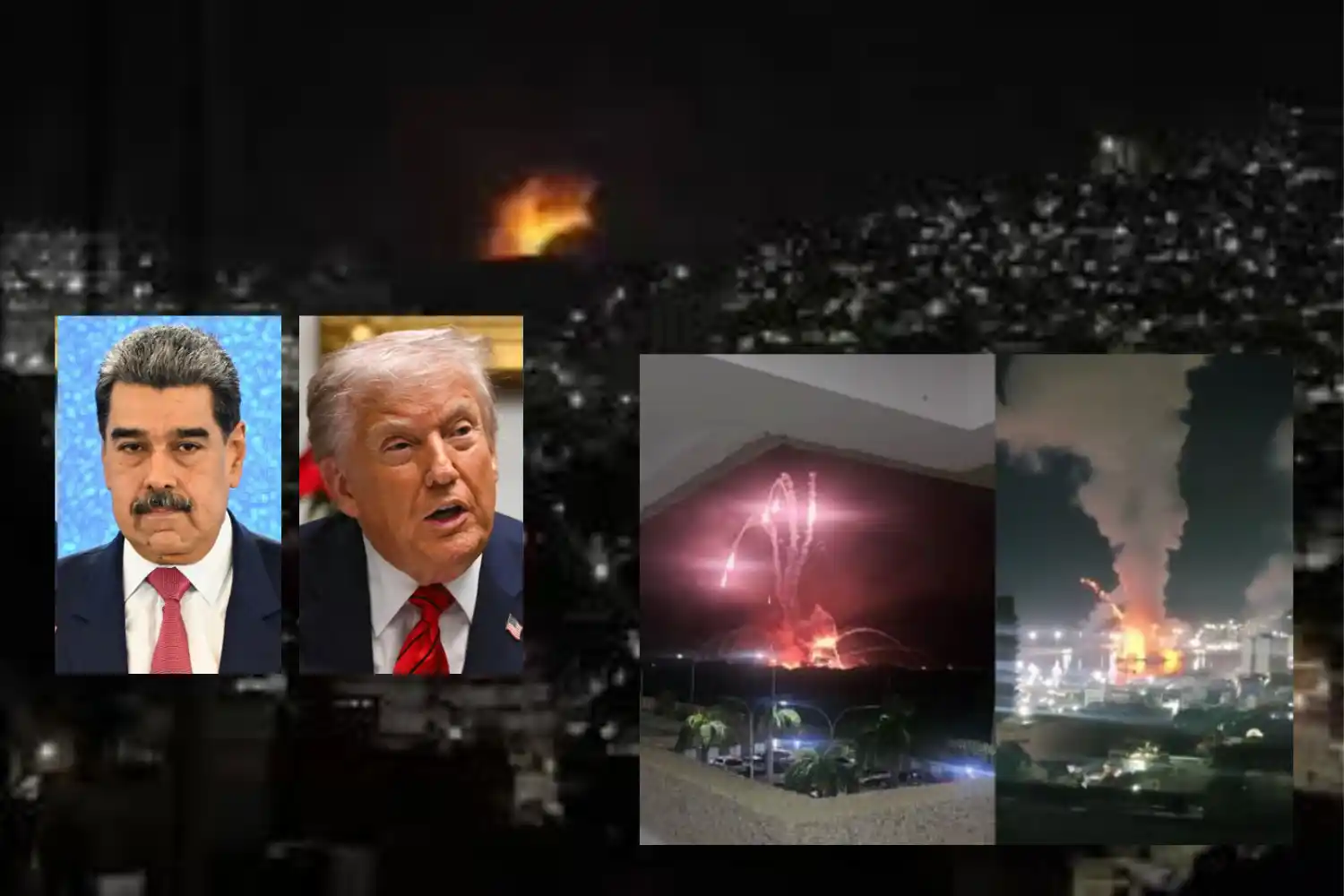
In the early hours of January 3, the United States launched airstrikes across northern Venezuela, code‑named Operation Absolute Resolve, hitting military installations and infrastructure in Caracas and beyond. By dawn, the US announced that President Nicolás Maduro and his wife had been captured by special forces and flown out of the country.
President Donald Trump, in a defiant press briefing, declared the operation a success and made an astonishing vow: the United States will “run Venezuela” until a “proper political transition can occur.” He doubled down on the military commitment, saying the US is “not afraid of boots on the ground.”
While US officials publicly framed the assault as a law‑enforcement mission targeting a narco‑dictator, global reaction was swift and overwhelmingly critical. UN officials warned the strikes set a dangerous precedent, violating international law. Russia, China, and Iran condemned Washington’s actions as blatant aggression.
Official Narrative vs. Reality
The US government insists the attack was justified on multiple fronts:
- Narcotics trafficking: Maduro is accused of running state‑linked drug networks.
- Illegitimacy: The US never recognized Maduro’s presidency following contested elections.
- Regional destabilization: Migration and criminal spillover impacting the US.
Taken together, administration spokespeople have cast Caracas as a rogue state requiring forceful intervention.
The Real Calculus: Power, Oil, and Geopolitics
Let’s be blunt: none of these reasons alone would justify unilateral military action under international law. The notion of “narco‑terrorism” has been repeatedly questioned, with critics noting a lack of transparent legal process.
So why did the US attack Venezuela?
1. Venezuelan Oil Still Matters, A Lot
Venezuela holds the largest proven crude reserves in the world. Despite years of sanctions and sabotage, its oil industry remains strategically significant, compatible with US refineries and capable of reshaping global energy flows. Control of this asset is a geopolitical prize.
And make no mistake: Trump’s own rhetoric made this clear. After the operation, he openly said Washington would be “very strongly involved” in Venezuela’s oil industry.
2. Breaking Russian and Chinese Influence
For years, Caracas served as a beacon for anti‑Western alliance building with Russia and China. Eliminating that foothold strikes directly at Moscow and Beijing’s influence in the Western Hemisphere, a classic geopolitical chess move. Independent analysts have pointed out that strategic motives loom larger than public safety claims.
3. Reasserting Monroe Doctrine‑Style Dominance
This isn’t subtle. Trump invoked a modern spin on the Monroe Doctrine, implying the Western Hemisphere is effectively America’s backyard, a message to both regional states and global competitors.
4. Setting a Dangerous Precedent
This operation shreds the post–World War II international system that bars unilateral attacks without Security Council approval. Legal experts label the action a crime of aggression.
The Role of Propaganda and Media Narratives
US media largely echoes official rationales: narco threats, human rights abuses, and democracy promotion. But this framing serves political ends:
- It humanizes intervention as “saving” Venezuelans, not occupying them.
- It masks economic motives with moral certainties.
- It keeps public focus on personality vilification (Maduro) rather than systemic interests (energy dominance).
Independent voices and regional analysts counter that this narrative is selective and incomplete at best; propagandistic and imperialistic at worst. The “drug trafficking” justification is one of convenience, weaponized to justify force.
Consequences: Who Pays the Price?
The immediate consequence for Venezuela is chaos and uncertainty. The power vacuum left by Maduro’s capture opens the door for US‑aligned political actors but risks civil strife and regional destabilization.
For Latin America, this is a tectonic shift. Nations that historically viewed US interventionism with suspicion now confront its return in the most dramatic way since the 1989 invasion of Panama.
Globally, the precedent is chilling: if Washington can bomb and seize a sitting president without international sanction, so could others. The door to might‑makes‑right foreign policy is creaking wide open.
Alternative Perspectives: Voices Usually Ignored
Independent analysts and regional commentators argue that:
- Migration flows have multifaceted causes, not just Venezuela.
- Drug trafficking claims lack transparent legal grounding.
- Sanctions and blockades brought Venezuela’s economy to its knees well before military action.
- The US is deeply invested in ensuring a compliant, pro‑Washington government that opens its resources to Western capital.
This unvarnished interpretation should not be dismissed out of hand. It aligns with centuries of recorded interventions by great powers in economies rich with resources.
What This Really Says About US Foreign Policy
The US attacked Venezuela not primarily out of moral urgency, but out of strategic calculation. When you strip away official rhetoric, what remains are the motivations that have driven empires for centuries: control of resources, geopolitical leverage, and the projection of unchallenged power.
This moment is not just a headline. It is a warning that hegemonic power still plays by old rules, even as global norms evolve. And Venezuela, once a proud nation of resilient people, now stands on the brink of transformation not by its own will, but by the forceful hand of a foreign power.
That is the story Washington won’t tell, but history will not forget.